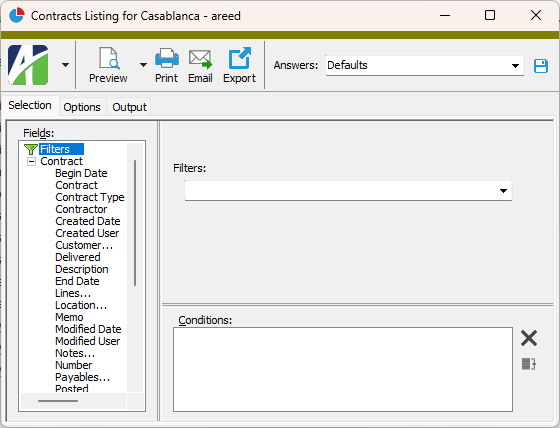
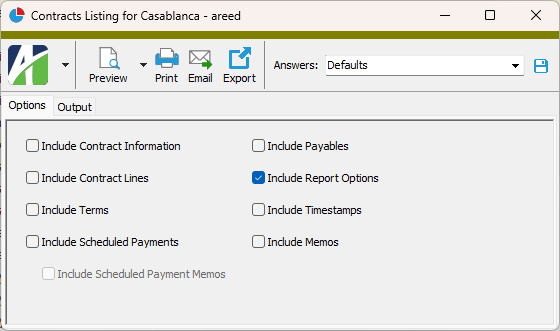
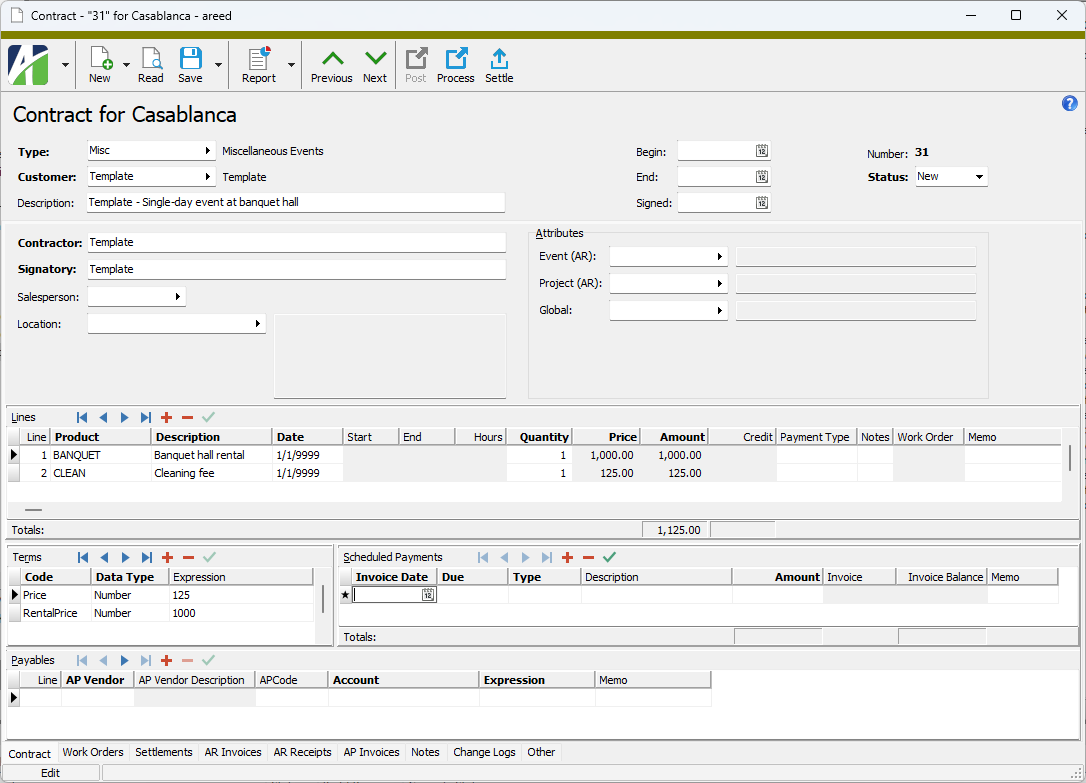
Contract Record ID
Type
The contract type.
Customer
The customer associated with the contract.
Description
A description of the contract.
Begin
The date the contract takes effect.
End
The date the contract ends.
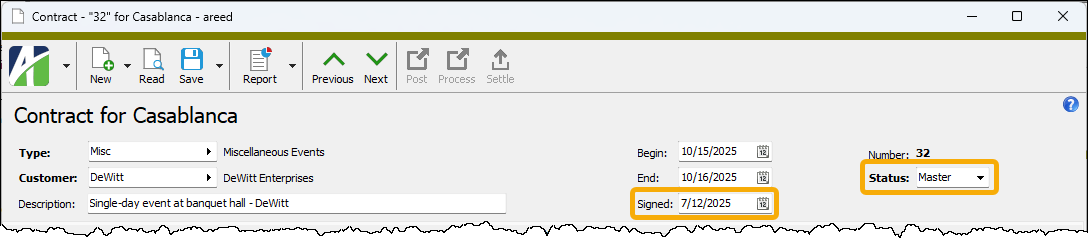
Signed
The date the contract was signed.
Number
The system-assigned contract number.
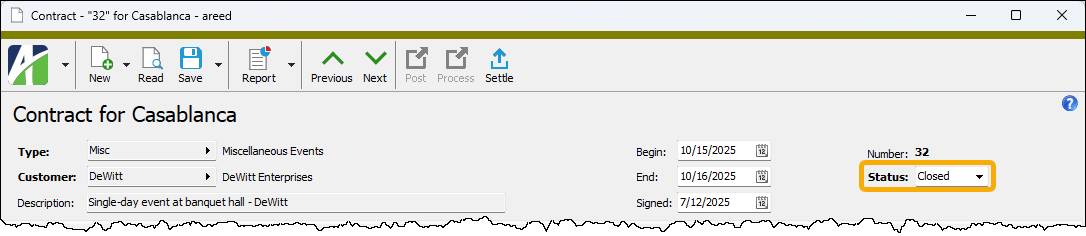
Status
The current status of the contract. Valid statuses include:
Contract tab
Contractor
The name of the contractor. This field defaults to the name of the selected customer.
Signatory
The name of the person who signed the contract on the customer's behalf.
Salesperson
The salesperson responsible for the contract.
Location
The location where invoices should be sent. You can select any location for the contract customer. If you do not specify a location, the customer's default invoice location is printed on the contract.
Attributes
For each attribute listed, select the attribute value that applies for the contract.
Lines table
Use this table to define contract lines.
Tip
Line numbers in the Lines table are editable. You can change the line numbers in order to reorder the rows in the table.
Product
The product associated with the contract line.
Description
A description of the selected product.
Date
The date the contract line is due.
Start
The start time for the item on the contract line.
End
The end time for the item on the contract line.
Hours
The duration of time for the item on the contract line. ActivityHD calculates this value for you. If you override the duration, the end time is adjusted accordingly.
Quantity
The number of units of the item on the contract line which were used on the specified date.
Note
Do not enter a quantity for any date/time period other than the date/time period specified on the contract line. Create a new contract line for each date/time period the item was used. The contract line Amount is calculated for you.
Price
The per unit price of the item on the contract line. If a default price is loaded, you can override it if necessary.
Amount
The calculated total for the contract line.
Credit
If the contract line is a credit contract line, the calculated amount of the credit for the line.
Payment Type
The payment type required for the contract line.
Notes
Notes about the contract line.
Work Order
The work order number associated with the contract line.
Memo
Additional information about the contract line.
Terms table
Use the table to provide values for any terms used in calculation expressions, credit calculation expressions, or payables expressions.
Code
The unique code for the term.
Data Type
The data type of the term. Valid types are:
- Date
- Number
- Text
- True/False
Expression
The value to replace the term with in the calculation expression for the product.
Scheduled Payments table
Use this table to record scheduled payments for the contract.
Note
Once scheduled payments are posted to Accounts Receivable, all columns except the Memo column, are disabled.
Note
Processes outside the Contract window can change the invoice balance without updating the value in the Contract window. Press F5 to ensure you are seeing the most current balances.
Use this table to record the vendors to pay on the contract and the expressions to use to calculate their payments.
Tip
Line numbers in the Payables table are editable. You can change the line numbers in order to reorder the rows in the table.
AP Vendor
The vendor providing value on the contract.
AP Vendor Description
The description of the AP vendor.
APCode
The APCode to associate with the vendor.
Account
The account to which to post payments to the vendor.
Expression
The expression to use to calculate payments to the vendor.
Memo
Additional information about the payable.
Work Orders tab
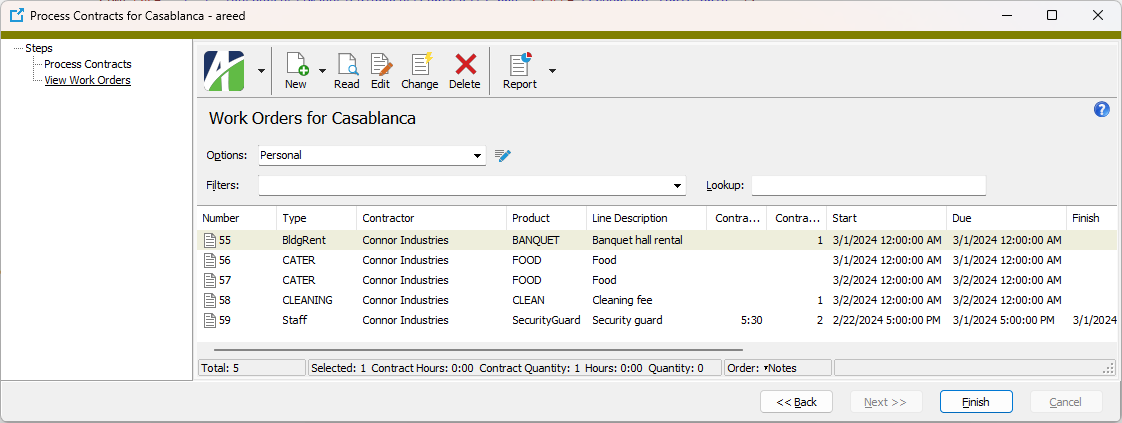
The Work Orders pane shows the Work Orders HD view filtered to show all work orders that reference the selected contract.
Double-click a row in the pane to drill down to its record in the Work Order window.
Settlements tab
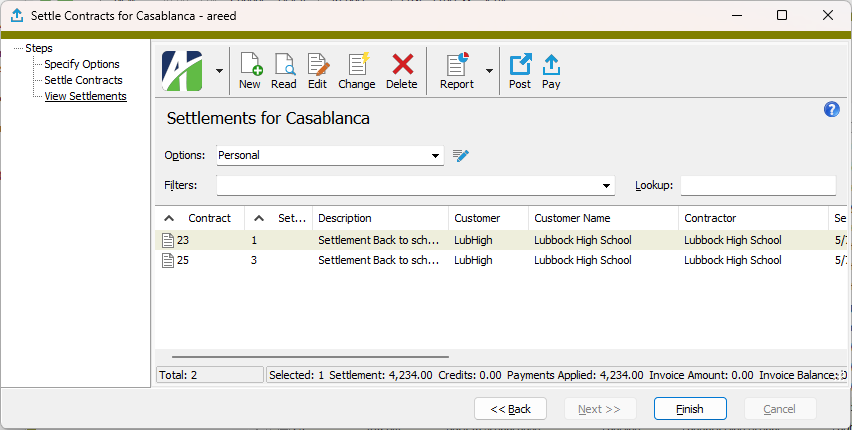
The Settlements pane shows the Settlements HD view filtered to show all settlements that reference the selected contract.
Double-click a row in the pane to drill down to its record in the Settlement window.
Settlement Lines tab
The Settlement Lines pane shows the Settlement Lines HD view filtered to show all settlement lines that reference the selected contract.
Double-click a row in the pane to drill down to the associated settlement record in the Settlement window with focus in the settlement line.
AR Invoices tab
The AR Invoices pane shows the AR Invoices HD view in Accounts Receivable filtered to show all AR invoices that reference the selected contract.
Double-click a row in the pane to drill down to its record in the AR Invoice window.
AR Receipts tab
Receipts subtab
The Receipts pane shows the Receipts HD view in Accounts Receivable filtered to show all AR receipts that reference the selected contract.
Double-click a row in the pane to drill down to its record in the Receipt window.
Receipt Detail subtab
The Receipt Detail pane shows the Receipt Detail HD view in Accounts Receivable filtered to show all AR receipt detail lines that reference the selected contract.
Double-click a row in the pane to drill down to its record in the Receipt Detail window.
AP Invoices tab
The AP Invoices pane shows the AP Invoices HD view in Accounts Payable filtered to show all AP invoices that reference the selected contract.
Double-click a row in the pane to drill down to its record in the AP Invoice window.
Notes tab
The Notes pane shows the Notes HD view filtered to show all notes for the selected contract.
Double-click a row in the pane to drill down to its record in the Note window.
Custom tab
This tab is visible if custom fields exist for the entity. At a minimum, if there are custom fields, a Fields subtab will be present. One or more additional categories of subtabs may also be visible.
Fields subtab
This tab prompts for values for any custom fields set up for entity records of this entity type. Respond to the prompts as appropriate.
References subtab
This tab is visible if other records reference the current record.
Reference
From the drop-down list, select the custom field to view references for. Reference custom fields have the following format: PackageName.EntityName.CustomFieldName.
Example
Suppose a custom field exists on PRCodes that references an ARCode. On the ARCode record, on the Custom > References subtab, you can view all the PRCodes which reference that ARCode.
Exchange Folder subtab
This tab is visible only if you set up a custom field with a data type of "Exchange Folder". The label on this tab is the name assigned to the custom field.
This tab shows the contents of the specified Exchange folder.
File subtab
This tab is visible only if you set up a custom field with a data type of "File". The label on the tab is the name assigned to the custom field.
This tab renders the contents of the specified file according to its file type.
Internet Address subtab
This tab is visible only if you set up a custom field with a data type of "Internet Address". The label on this tab is the name assigned to the custom field.
This tab shows the contents of the specified web page.
Network Folder subtab
This tab is visible only if you set up a custom field with a data type of "Network Folder". The label on this tab is the name assigned to the custom field.
This tab shows the contents of the specified network folder.
The Attachments tab is visible if any record for a given entity has an attachment. If the Attachments tab is not visible, this implies that no record of the entity type has an attachment on it; however, once an attachment is added to any record of the entity type, the Attachments tab will become available.
Attachments
The list box shows the files which are attached to the current record. Highlight a file name to preview the file in the adjacent pane. Double-click a file name to open the file in its native editor.
Preview pane
If a file name is highlighted in the Attachments list box, this pane shows a preview of the file contents. Some file types cannot be previewed but can be double-clicked to open in their native editor.
Change Logs tab
This tab is visible if the user has "Change Logs" access to the associated data folder resource.
The Change Logs pane shows the Change Logs HD view filtered to show all change logs for the selected entity record.
Double-click a row in the pane to drill down to its record in the Change Log window.
Other tab
Memo tab
To include additional information about this record not collected elsewhere, enter it in this text box. This area supports common keyboard shortcuts such as Ctrl+C to copy and Ctrl+V to paste.
Timestamps tab
This tab shows the user who created this record and the date and time of creation as well as the user, date, and time of the latest modification to the record.
Developer tab
This tab is visible only when developer features are enabled.
Automation subtab
This subtab shows field names and values for the current data record. Use the information in the subtab to assist when creating automation objects such as bots and import files. The field names and field values can be copied from the text box and pasted directly into your code or application. To copy content from the text box, highlight the content to copy and press Ctrl+C or right-click your selection and select Copy from the context menu.
Export (XML | JSON) subtab
This subtab shows the XML syntax for exporting the selected data record. The syntax can be copied from the text box as an exemplar for creating your own automation objects for bots, import files, ActivWebAPI, etc. To copy content from the text box, highlight the content to copy and press Ctrl+C or right-click your selection and select Copy from the context menu.
Import (XML | JSON) subtab
This subtab allows you to select a file for import and shows the XML syntax for importing data records. Use the subtab to explore the XML syntax for importing data records. In particular, you can investigate the syntax which results when using Data.Import and ActivWebAPI data POST and DELETE routes.
Change Log (XML | JSON) subtab
This subtab is visible only when the Enable Change Logs option is marked in System Options or Company Options (depending on whether the feature applies at the system or the company level). This is the default setting when developer features are enabled.
This subtab allows you to investigate changes to the current data record. The syntax can be copied for use in bots, dashboards, ActivWebAPI, and other automation. To copy content from the text box, highlight the content to copy and press Ctrl+C or right-click your selection and select Copy from the context menu.
Select Statement (SQL) subtab
This subtab allows you to investigate the SQL select statement used to retrieve the current data record. The syntax can be copied as an exemplar for data sources and other automation. To copy content from the text box, highlight the content to copy and press Ctrl+C or right-click your selection and select Copy from the context menu.
 Create a contract
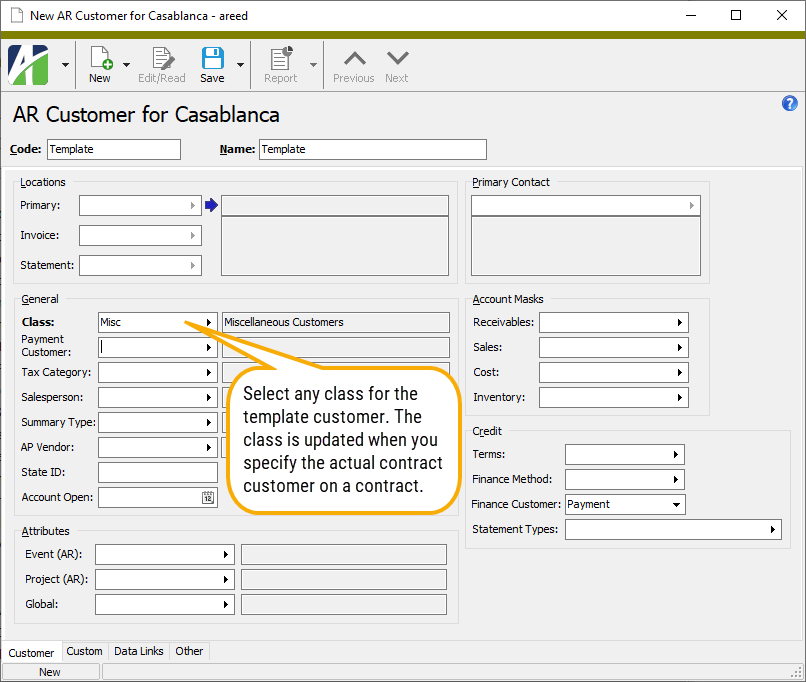
 and fill out the New Contract window.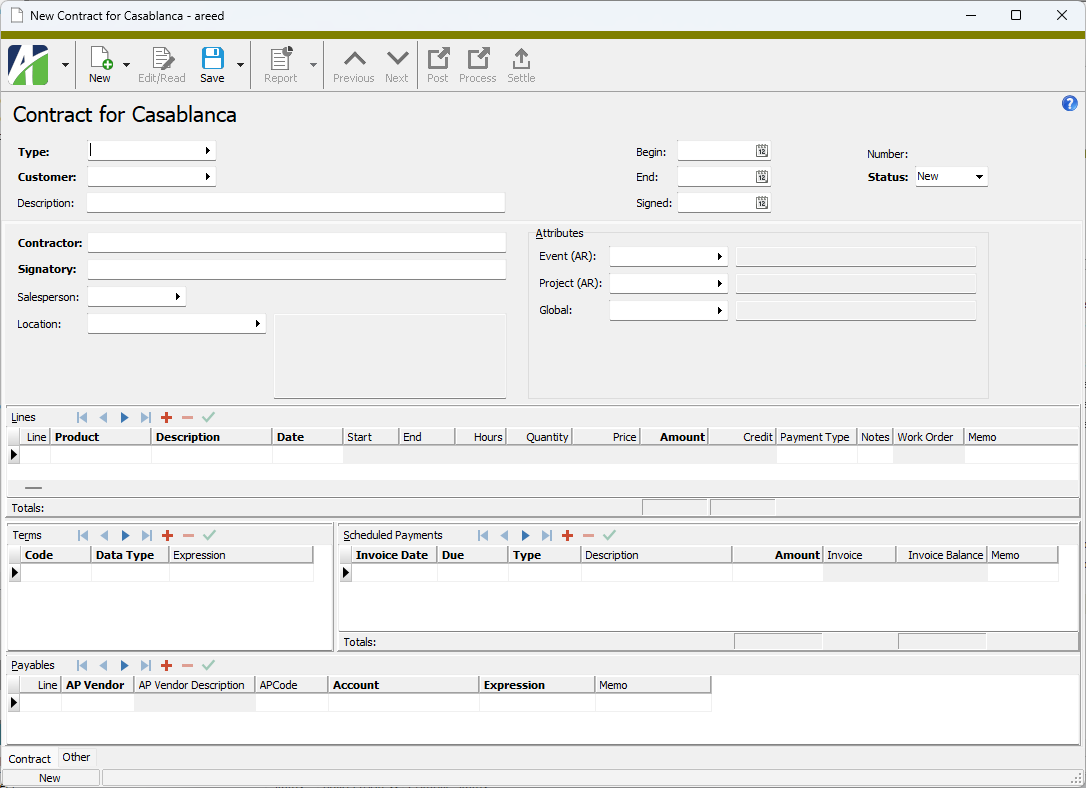

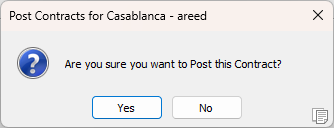
 (Post). The Post Contracts wizard starts.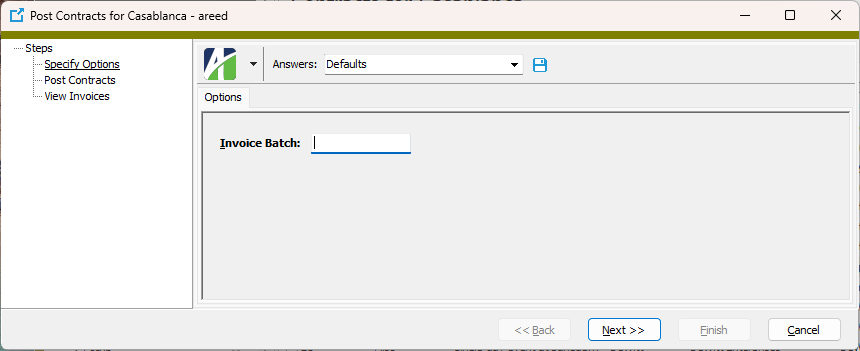
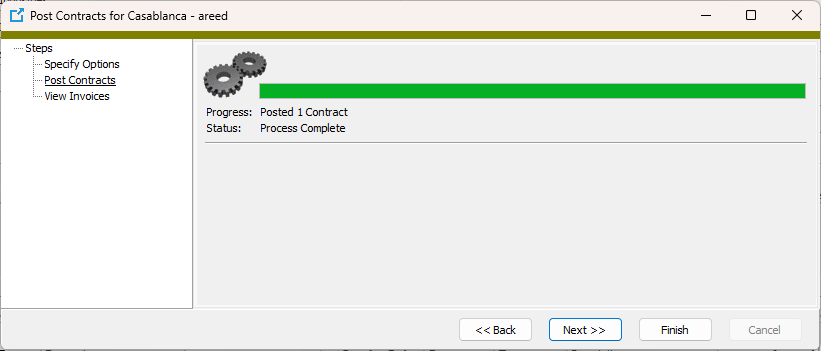
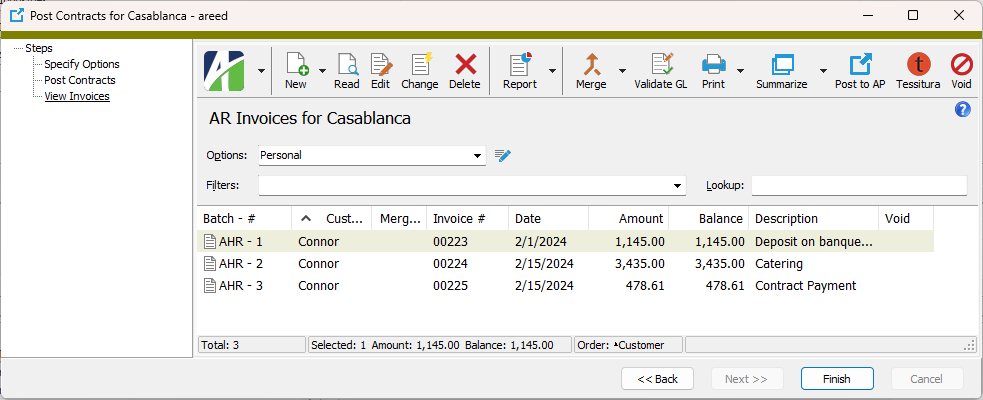
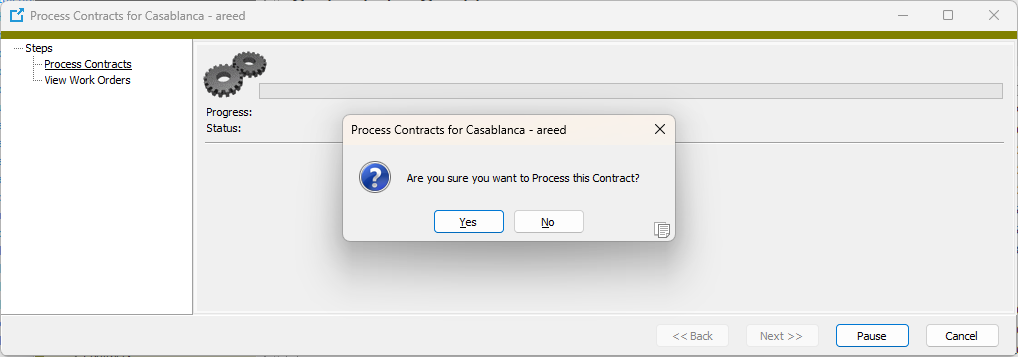
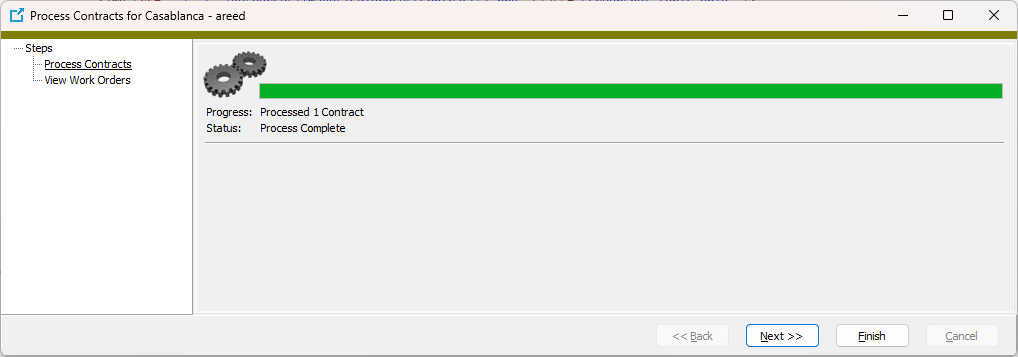
 .
.
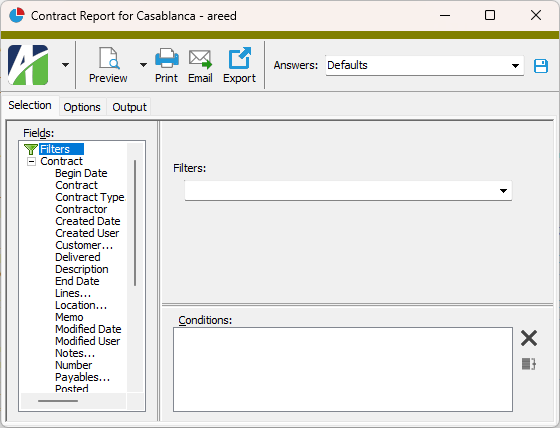
 and select Contract Report from the drop-down menu.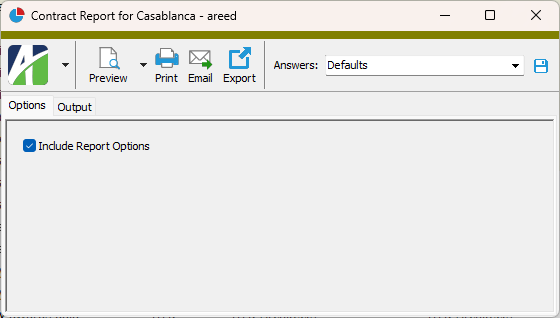
 - Provides access to two preview options.
 - Opens the Print dialog so that you can select and configure a printer and then print a paper copy of the report.
 - Opens the